being outside \ what nature does without asking
There's something that happens outside that doesn't happen indoors. Thoughts slow. Breathing deepens. The mind stops circling the same patterns and settles into something quieter.
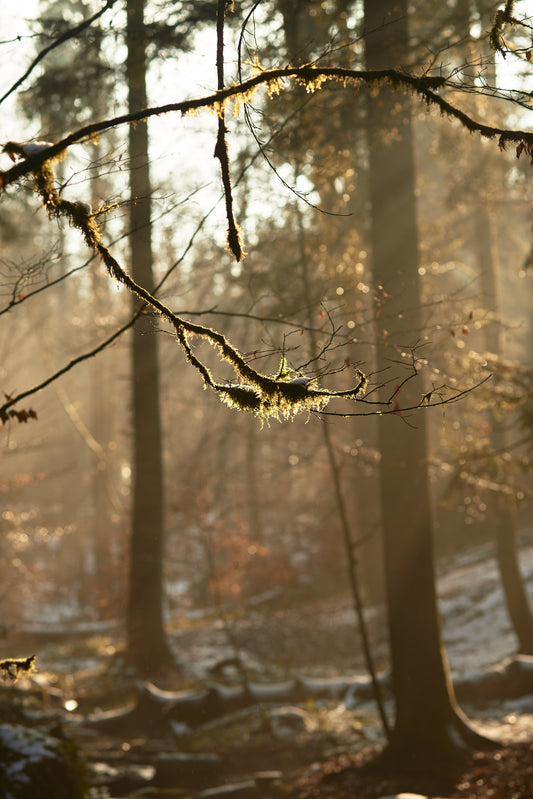
This isn't imagination. Studies show that time in nature - even just looking at trees through a window - lowers blood pressure, reduces cortisol, and improves mood. The Japanese practice of shinrin-yoku, or forest bathing, is based on this: walking slowly through woodland, not for exercise but for presence. The air, the light, the sounds - all of it does something the body recognises even if the mind doesn't have words for it.
In Scandinavian culture, friluftsliv (open-air living) is woven into daily life - not as recreation but as necessity. Time outside isn't treated as something you earn through productivity. It's understood as essential, especially in winter when darkness is long and light is brief.
Being outside doesn't require wilderness. A park, a garden, a quiet street with trees - these are enough. What matters is noticing what's there: wind on your skin, birds calling, the way light changes as clouds move.
Nature doesn't ask anything of you. It doesn't need you to perform, produce, or improve. It just continues - growing, changing, being - and when you're part of it, even briefly, something in you remembers how to do the same.
What helps:
Short walks with no destination, just noticing
Sitting outside for a few minutes without your phone
Touching textures - bark, leaves, grass, stone
Listening to what's around you rather than what's in your head
Outside is where the body remembers it's not separate from the world. Even a few minutes can shift something.
listen: to the playlist that accompanies this concept: on the path \ pine-scented air