familiar meals \ how the seasons shape what we eat
Some meals return again and again over the years.
They are not always elaborate. Often they are simple dishes that appear quietly in certain seasons - the soup made when the air turns cold, the first fresh salad when spring arrives, a bowl of fruit on a warm afternoon.
These meals become familiar not only because of taste, but because of the moments they accompany.
A dish remembered from childhood may appear again in winter. The warmth of it feels almost as important as the ingredients themselves.
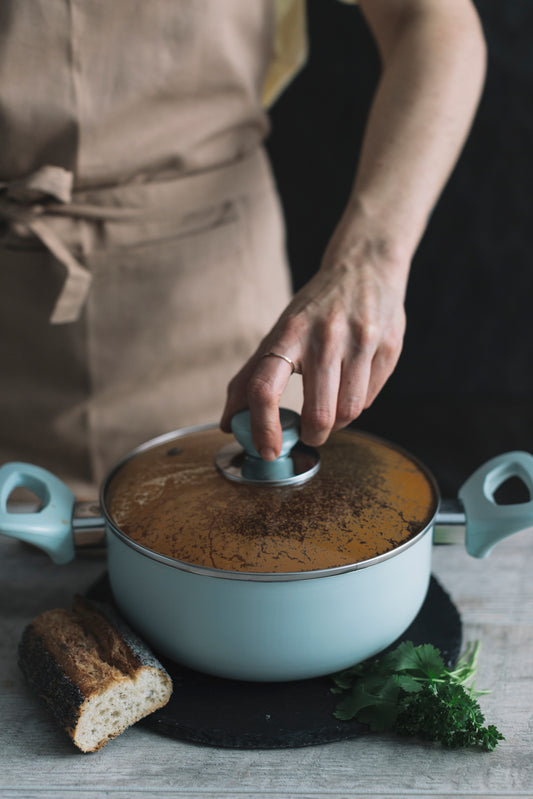
In colder months, meals often grow slower and more comforting. Pots simmer longer on the stove. Bread appears more often on the table. The kitchen becomes a place where warmth gathers in the middle of the house.
As the seasons change, the rhythm of eating changes with them.
Spring brings lighter meals - greens, simple dishes that feel fresh after the heaviness of winter. Summer often asks for very little cooking at all: tomatoes, fruit, a loaf of bread shared at the table.
Autumn returns to deeper flavours again. Roasted vegetables, soups, and dishes that fill the kitchen with scent as they cook.
None of these meals need to be planned carefully. Many simply return because they always have.
Over time they become part of the quiet structure of the year - dishes that appear almost instinctively when the weather changes.
And when they do, they carry something else with them: memory, familiarity, and the quiet comfort of knowing exactly what the season tastes like.